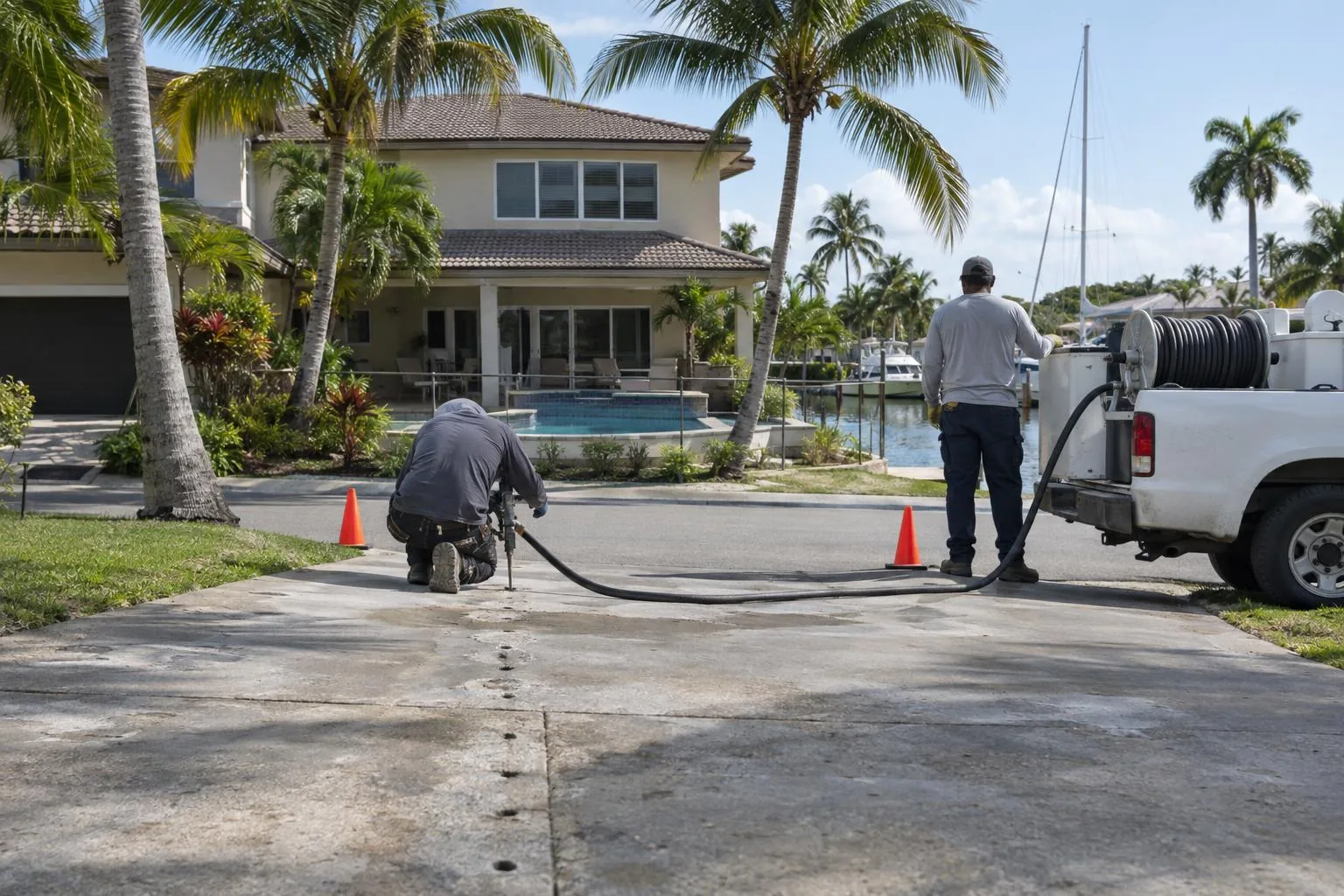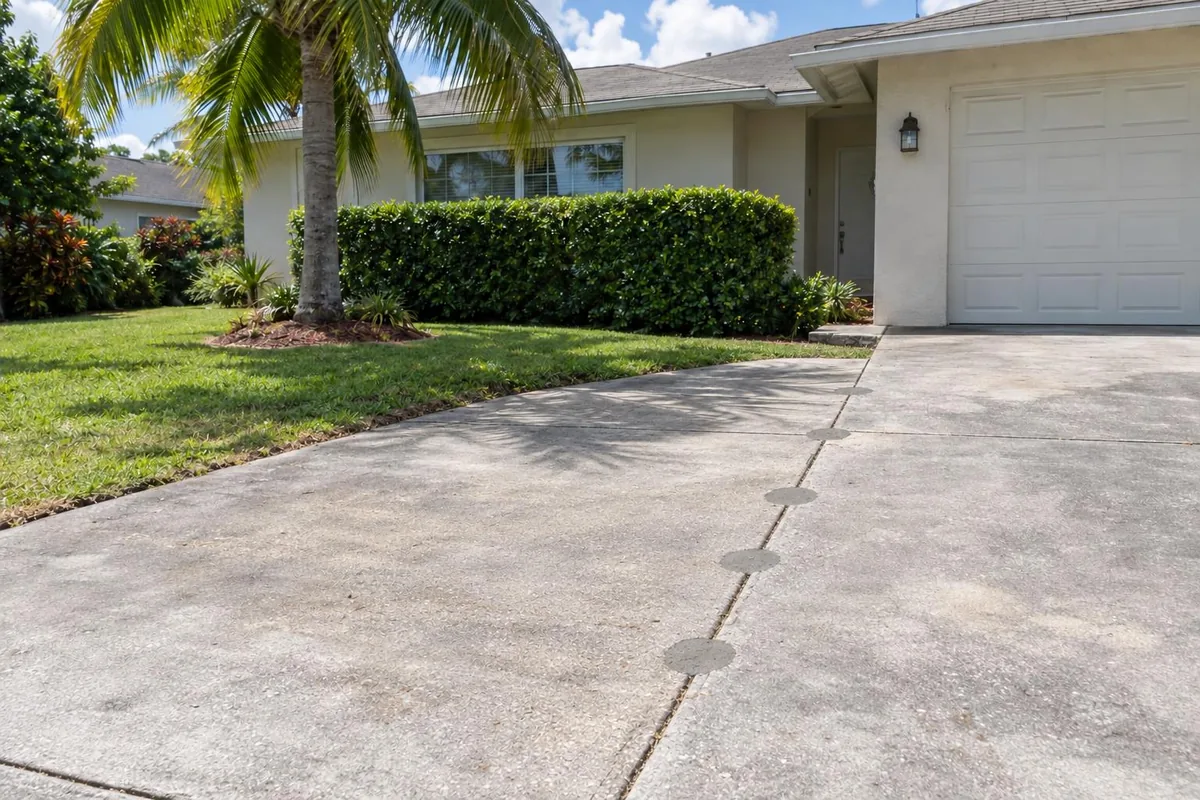
Driveways sink at the seams, where one slab meets the next and the sand beneath has moved. A dropped slab leaves a ridge that scrapes bumpers and sends rain toward the garage door. We drill small holes and fill the void with expanding polyurethane foam, which lifts the slab to match the one beside it. The ridge shrinks to a thin joint. A driveway that has separated from the garage apron is lifted in the same pass, so the gap closes and runoff stops getting under the concrete.
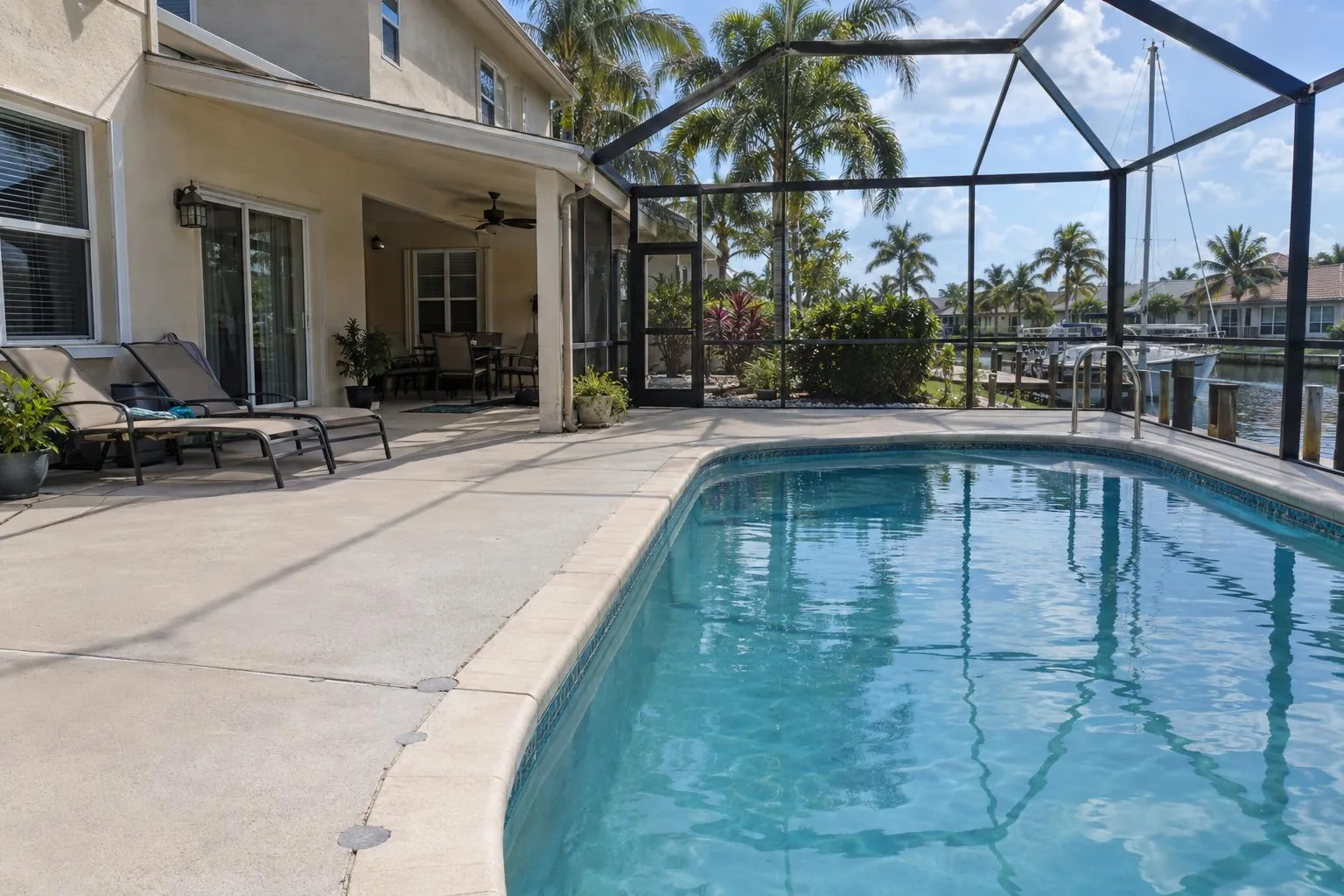
Around a Fort Lauderdale pool the ground stays wet, and wet sand slides out from under the deck edge. The result is a ledge beside the coping and a low corner where water collects. Pool decks carry bigger voids than most slabs, so the crew checks how far each gap reaches before the first injection. A lifted deck keeps its tile, its coping and its screen enclosure. The slope that sends rain to the drain comes back, and foam cures quickly enough to use the deck the same day.
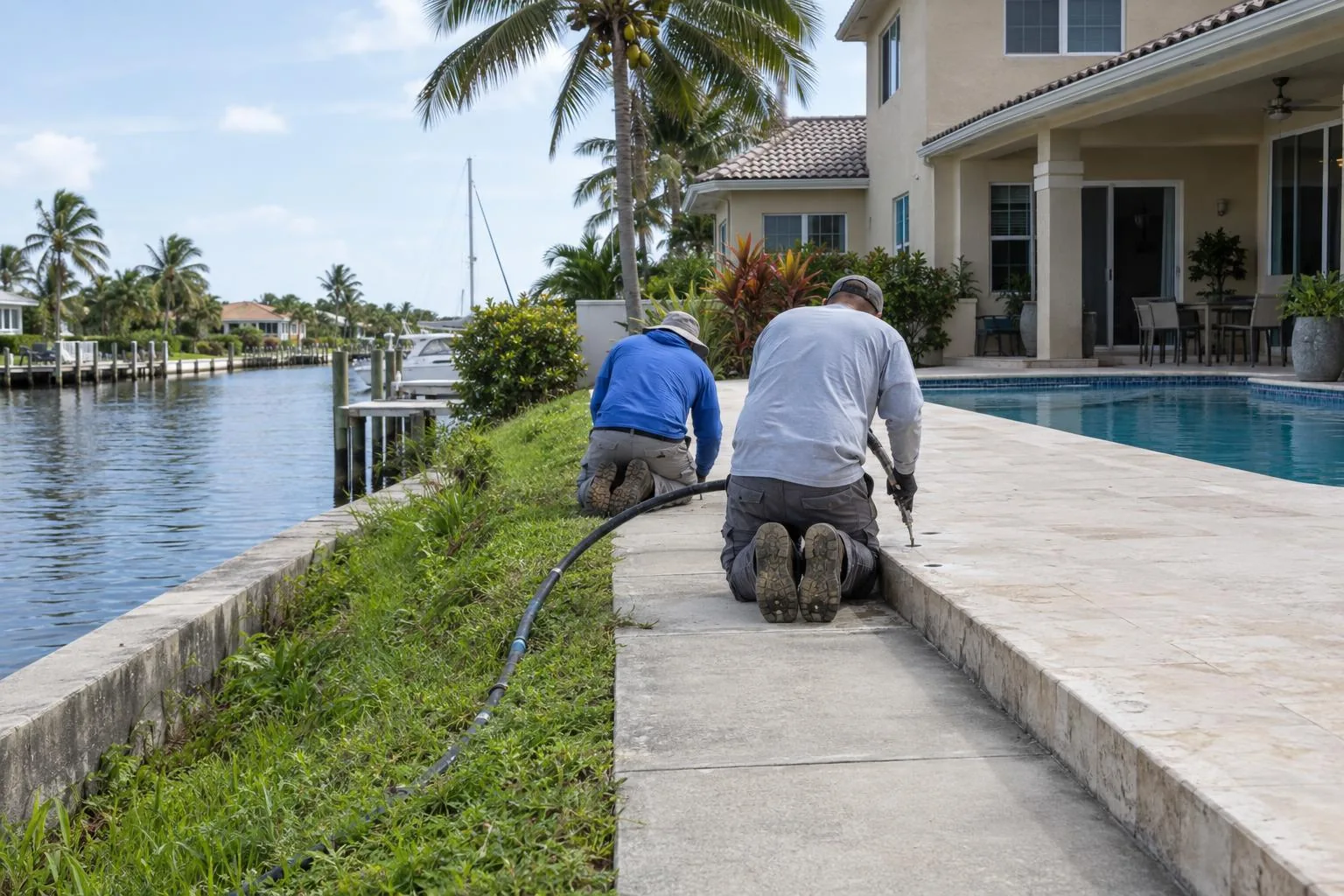
A sidewalk panel that rises or sinks by even an inch becomes a trip hazard for every walker who passes. We bring sidewalk and walkway panels back up until the edges meet, at homes and along commercial entrances, parking areas and loading zones. Lifting one panel is a smaller job than cutting out a stretch of walkway and starting over, and the path reopens within hours. Entrances, parking areas and loading zones get the same treatment. Fort Lauderdale also has rules on who pays for sidewalk repair, which the FAQ below explains.
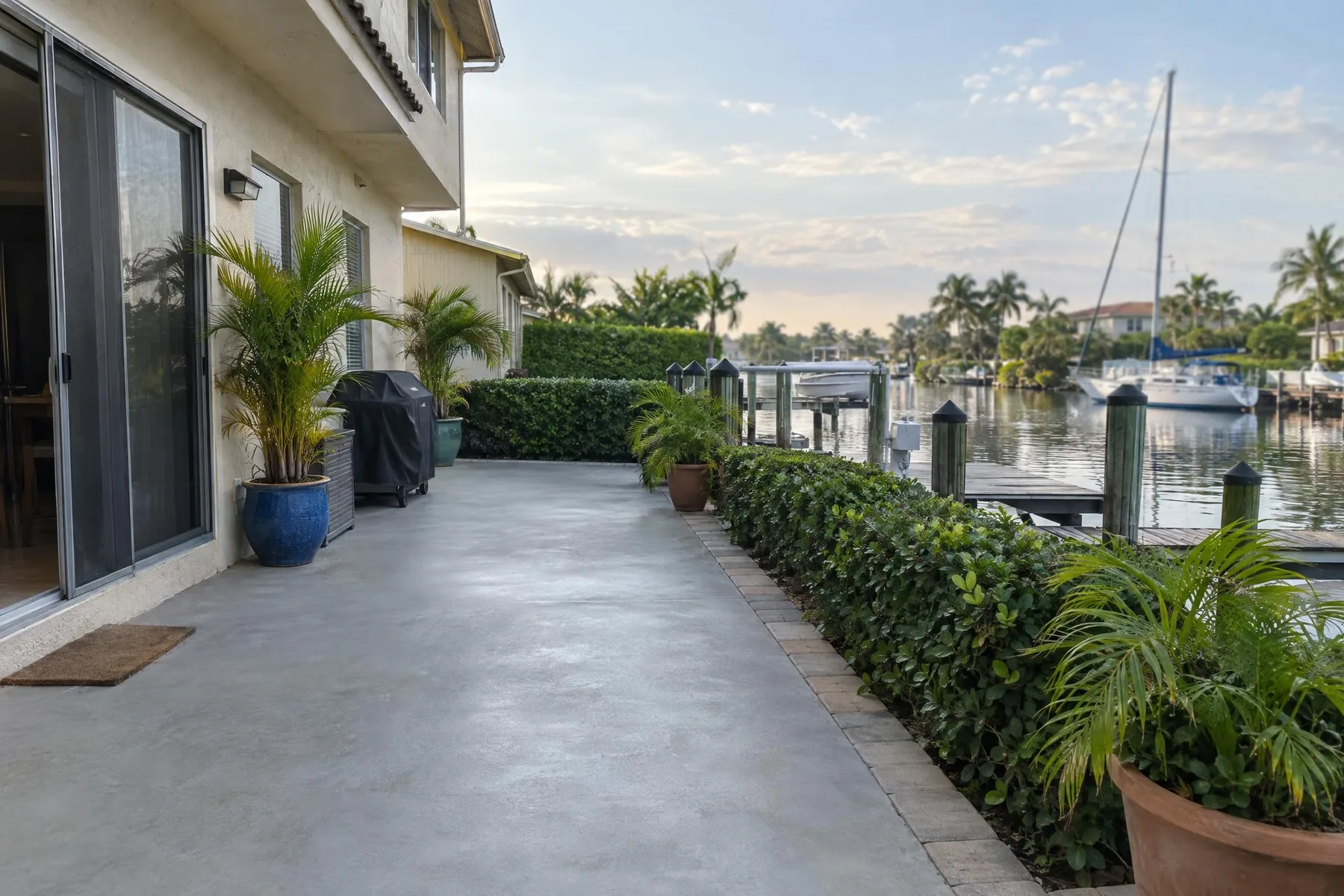
Patio Leveling
A patio often drops at the side that faces the yard, since that is where rain leaves the slab and takes sand with it. Foam under a patio or lanai slab gets the water draining off again, and the table stops wobbling. The gap along the edge closes too, which keeps more soil from washing in behind the concrete. Patios near a canal or a pool sit in especially wet ground, and the crew plans the lift around that. A level patio also keeps rain from running back toward the house wall, which protects the door track and the slab edge.
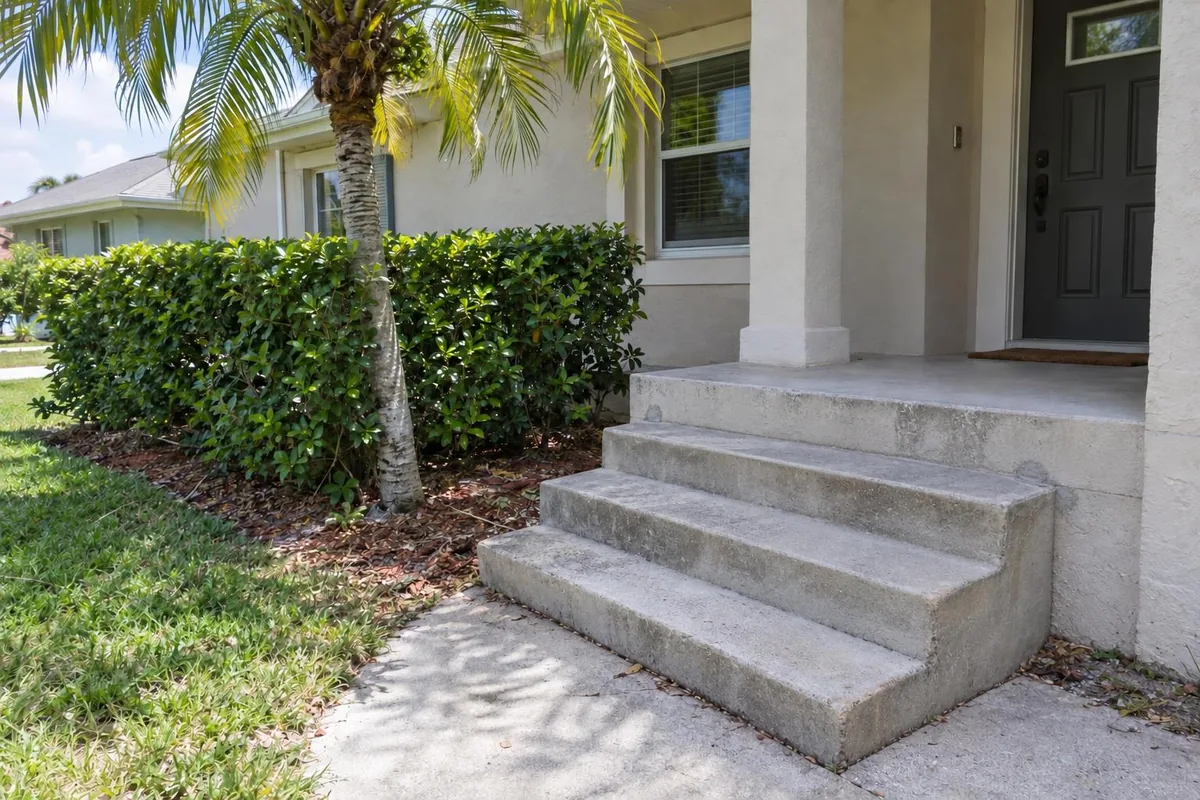
Porch Leveling
A settled porch pulls away from the wall and tips toward the door, which sends rain to the one place it should not go. We raise porch slabs until they meet the threshold, and we fill the gap against the house. The step down to the walk evens out as well. Porches often sink where a roof downspout empties beside the slab, so the visit includes a look at where your roof water lands. Fixing the slab without moving that water would only invite the next dip, and a short extension on the downspout is a cheap guard against it.
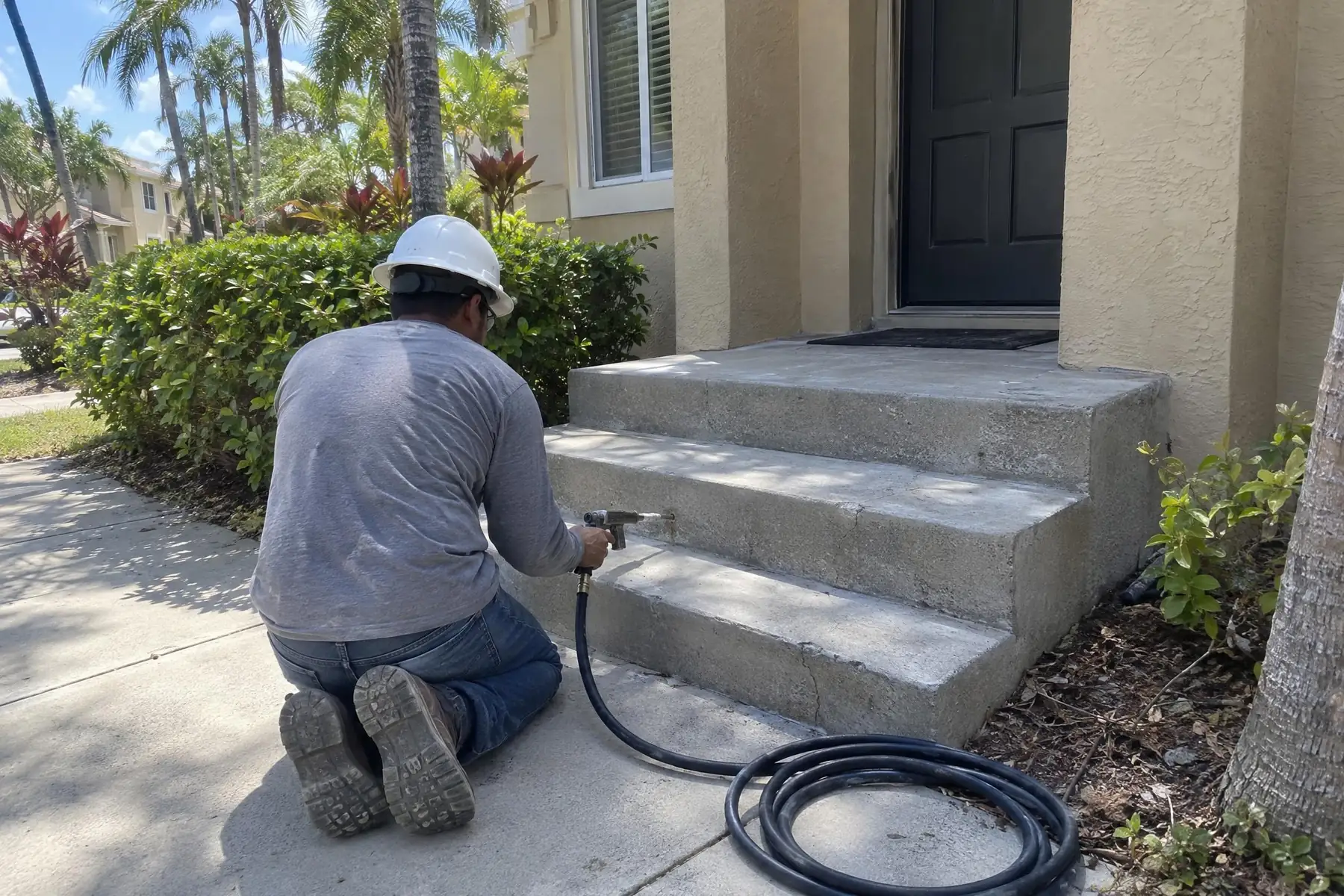
Concrete Steps Leveling
Steps that sink unevenly leave one riser taller than the others, and that is how people fall in the dark. We lift front steps and stoops together with the walk at their base, since a sidewalk often drops along with the steps. After the lift, the crew measures each riser so the rise is the same from the bottom to the top. Then the holes are patched, and the stairs are safe to use again. Railings stay where they are, and the stoop and the walk meet cleanly again at the bottom step.